



Your Dog Has Been Prescribed Numelvi
Numelvi is a prescription medication to help manage your pet’s itch and allergic inflammation. Instructions for use will be provided by your veterinarian.
What You Need to Know About Numelvi
Numelvi is a prescription medication for dogs. It treats itch caused by allergic dermatitis including atopic dermatitis.

Acts fast
Absorbed quickly, acting fast to relieve allergic itching.

Suitable for young dogs
Approved for dogs from 6 months of age and older.

Easy, once-daily dosing
Given once daily with food at or around mealtime.

Well tolerated
The most common mild and self-resolving side effects were diarrhoea, vomiting, lethargy and reduced appetite.

No interference with routine treatments
Can be used with other routine treatments and vaccines.
About Numelvi
What is Numelvi?
Numelvi is a prescription medication for the treatment of itch associated with allergic dermatitis and symptoms associated with atopic dermatitis in dogs.
Numelvi is the first of a new generation of Janus kinase (JAK) inhibitors. A JAK inhibitor is a type of medicine that helps calm the immune system to relieve itching and inflammation. Unlike earlier JAK inhibitors that block multiple enzymes, Numelvi targets one specific enzyme that is the primary driver of itch and inflammation. This selective approach helps relieve itching, reduce inflammation and support the immune system.
Why did my veterinarian prescribe Numelvi for my dog?
Itchy skin can interfere with your dog’s sleep, play, appetite and behaviour. Your veterinarian has prescribed Numelvi to help keep your dog feeling their best. Numelvi is absorbed quickly, acting fast to relieve itch.
Is Numelvi approved for all dogs with allergic dermatitis?
You veterinarian will decide if Numelvi is right for your dog.
How often do I need to give Numelvi to my dog?
Numelvi is given once daily with food (at or around mealtime). Numelvi can also be given alongside other important treatments or vaccines.
How often will my dog need to come back for follow-up visits?
Please check with your veterinarian when they recommend you should have follow-up visits.
What should I do if I miss giving a dose of Numelvi?
If you have missed giving a dose of Numelvi or are not certain whether you gave the dose successfully, then give the next dose as scheduled 24 hours later. There should be no need to administer an extra dose.
How long is a treatment course of Numelvi?
Dogs with flea allergy dermatitis may only require a short course of treatment with Numelvi to reduce itch, in addition to year-round flea control. Dogs with seasonal allergic dermatitis typically require Numelvi every year when they are itchy. Other dogs, like those with atopic dermatitis, may require year-round itch management. We advise year-round flea control for dogs with allergic dermatitis.
Can dogs taking Numelvi be vaccinated?
It is important that a dog remain up to date with vaccinations against serious diseases such as canine distemper, canine hepatitis, canine parvovirus and leptospirosis. Once an approach to managing allergic dermatitis has been recommended, any necessary adjustments to preventive healthcare such as vaccinations will be made.


What Is Allergic Dermatitis?
Dermatitis is a broad term used to describe any inflammation or irritation in the skin. Allergic dermatitis is an itchy skin condition caused by your dog’s immune system reacting to allergens.
Allergic Dermatitis Can Be a Chronic Condition
Some types of allergic dermatitis are chronic (long term) , while others can be seasonal. Either way, managing the itch and inflammation with your veterinarian is important.
Finding relief will not only improve your dog’s well-being—but also your own peace of mind.

The Main Types and Triggers of Allergic Dermatitis

Atopic
Allergens like house dust mites, moulds and pollens.

Food allergy
Certain foods like beef, chicken, dairy products and wheat.

Flea allergy
Proteins and other substances injected into the skin by fleas when they bite.

Other
Insect bites, contact allergens and other irritants.

What Are the Signs of Allergic Dermatitis?
The most common sign is itching. An itchy dog may scratch, rub, chew, lick, over-groom, roll, scoot or shake their head, which may result in skin lesions or sores.
Common signs can include:

Itching
(can include reddish-brown discoloration of light hair due to licking)

Hair loss

Redness of skin

Discharge
(may be greasy, oozing or contain blood and can be localised ‘hot spot’)

Scaling / Crusts
(dandruff, may be localised patches and/or crusts)

Leathery or thickened skin
Your veterinarian may have discussed the possibility of flare-ups with you. If you are worried a flare-up is happening, contact your veterinarian immediately. The sooner your veterinary team can identify the cause, the sooner your dog can enjoy lasting relief.
Most Common Areas Affected

Food-responsive dermatitis cannot be distinguished from other forms of allergic dermatitis by areas affected alone. Flea allergy dermatitis most commonly affects the rump, but can also be found on the belly, back of thighs and neck. Sometimes, pets can have flea allergies and other types of skin allergies at the same time.
How Was Your Dog’s Cause of Itch Diagnosed?
Allergic dermatitis is a diagnosis of exclusion. Your veterinarian will rule out and treat other causes of itch before confirming a diagnosis of allergic dermatitis.
To start, your veterinarian may have done some or all of the following:

Taken a detailed history of your dog (seasonality of itch, itch severity, areas of the skin affected, presence of gastrointestinal signs and flea control)
Conducted a thorough physical examination
Performed diagnostic tests such as skin scrapings, skin swabs or hair tests to check for parasites and other infections
Recommended a diet trial to see if your dog’s signs improve after switching to a specially formulated diet

Every dog is different, so your veterinarian will use their expertise and judgment to decide the treatment plan that is best for your pet.
Follow up with your veterinarian to help keep your dog itch-free and comfortable.

Frequently Asked Questions
Get answers to common questions about your dog’s itchy skin and how to manage it.
About Allergic Dermatitis
What is atopic dermatitis?
Atopic dermatitis is a chronic form of allergic dermatitis in dogs. The development of atopic dermatitis is complex. It typically develops in response to skin exposure to common environmental allergens like house dust mites, moulds and plants.1 A combination of factors like genetics, abnormalities in the skin barrier and skin microbiome, environmental exposure and lifestyle can influence the development of atopic dermatitis. These complex interactions contribute to the differences in pattern and severity of clinical signs and prognosis in affected dogs.1
Are there specific breeds or age groups that are more prone to developing allergic dermatitis?
Allergic dermatitis can affect any dog breed and age group, but certain breeds may be more predisposed. Breeds such as boxer, bulldog, Labrador retriever, pug and West Highland white terrier are predisposed to atopic dermatitis.1 Dogs may develop allergic dermatitis at any age, but signs often start between the ages of 6 months and 3 years.2
How common is otitis externa in dogs with allergic dermatitis?
Otitis externa is inflammation of the external ear with overgrowth of bacteria and/or yeast. It is common and occurs in up to 10-20% of dogs in general practice.3-5 Allergic dermatitis is the primary cause of otitis externa in more than two-thirds of affected dogs.5,6 It is the most common cause of otitis externa in dogs and may be the only sign of allergic dermatitis.5,7
How do you treat a dog’s itchy skin?
Veterinarians usually prescribe an itch-relief treatment as the first line of defence and may also recommend supportive care like a medicated shampoo, fatty acid supplements, year-round flea control or a specific diet to help keep your dog feeling their best.
Effective management and treatment of allergic dermatitis can help relieve symptoms and improve your dog’s quality of life.
Can I use more than one itch-relief treatment on my dog?
Your veterinarian will recommend the best course of treatment for your dog’s itchy skin, which may include a combination of an oral prescription treatment for itch like Numelvi and other products like antibiotic and antifungal creams, medicated shampoos, topical skin and ear cleansers or nutritional supplements. Numelvi may be used with these common products as well as other routine treatments like flea, tick and internal parasite medicines.
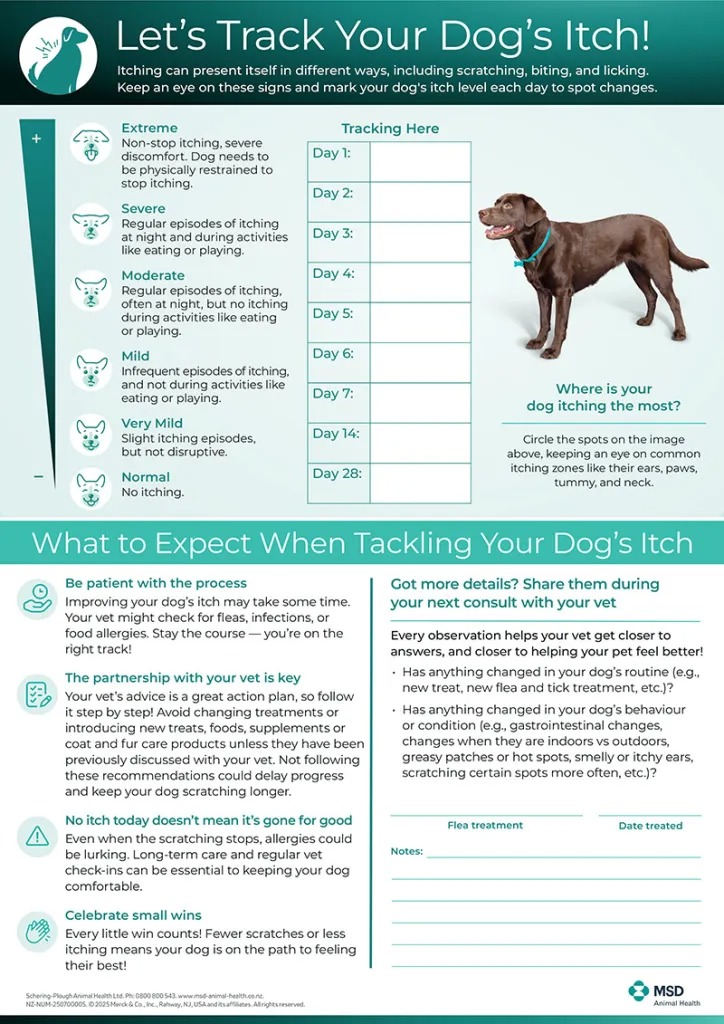
What should I expect when tackling my dog’s itch?
When managing your dog’s itch, here are a few points to keep in mind:
- Be patient with the process. Diagnosing the cause of your dog’s itch may take some time.
- Consistency is key. Skipping doses of prescribed medications, changing treatments or introducing new treats, food, supplements or coat and hair products could delay progress and prolong scratching.
- Stay on top of the itch. Long-term care and regular veterinary check-ins can be essential to keeping your dog comfortable.
- Celebrate small wins. Fewer scratches or a wagging tail means your dog is on the path to feeling their best!
What information should I share with my veterinarian during appointments?
Every observation helps your veterinarian get closer to answers. Be sure to tell your veterinarian if you’ve noticed changes in:
- Your dog’s routine
(flea-control products, new foods or treats) - Your dog’s behaviour
(more scratching, licking or chewing; changes in mood, appetite or energy level) - Your dog’s condition
(skin changes, hair loss, ear problems or odour)
An itch tracker is available in resources which can assist you summarise the information your veterinarian would like to know.
What other management approaches help to optimise a dog’s skin and coat health?
Additional treatment using a combination of baths, supplements and diet may help to optimize a dog’s skin and coat health and minimize flare-ups.8 Regular monitoring and follow-up with the veterinary team, particularly if a dog has a recurrence of itch (flare-up) are important. The sooner itch treatment starts, the faster the itch will resolve and the less long-term damage there will be to a dog’s skin.
Do dogs with allergic dermatitis need allergy tests?
Allergy tests may help to identify triggers of allergy in individual dogs but do not diagnose allergy or differentiate dogs with allergic dermatitis from healthy dogs.9 They can be helpful in guiding treatment like allergen avoidance and allergen-specific immunotherapy (ASIT, allergy injections) in dogs with atopic dermatitis. Allergy tests for dogs include blood tests for specific antibodies and intradermal skin testing (IDT).
How are dogs with food-responsive dermatitis identified?
A food elimination trial helps to identify whether a dog has food-responsive dermatitis. During this trial, a strict diet containing a novel or hydrolyzed protein source is fed. During the trial, it is crucial that the dog does not consume table scraps, flavoured treatment, treats or dietary supplements, as these can make the results of the trial difficult to interpret. The trial typically lasts for 8 to 12 weeks.7 At the end of the trial, the previous diet is re-introduced. If the itch returns on re-introduction of the previous diet, this helps to confirm that the dog has food-responsive dermatitis. Continuing to feed the special diet will help to reduce or even eliminate the need for itch treatment or other types of treatment.

Resources
Access these materials to learn more about allergic dermatitis and how best to care for your itchy dog.
References
1. Hensel P, Saridomichelakis M, Eisenschenk M, et al. Vet Dermatol. 2024;35(1):15-24. 2. Santoro D. Vet Clin North Am Small Anim Pract. 2019;49(1):9-26. 3. O’Neill DG, Church DB, McGreevy PD, et al. PLoS One. 2014;9(3):e90501. 4. Hill PB, Lo A, Eden CA, et al. Vet Rec. 2006;158(16):533-539. Correction published in Vet Rec. 2006;158(22):763. 5. Zur G, Lifshitz B, Bdolah-Abram T. J Small Anim Pract. 2011;52(5):254-258. 6. Hnilica KA. Diseases of the eyes, claws, anal sac and ear canals. In: Hnilica KA, ed. Small Animal Dermatology: A Color Atlas and Therapeutic Guide. 4th ed. Elsevier; 2011:395-409. 7. Miller J, Simpson A, Bloom P, et al. J Am Anim Hosp Assoc. 2023;59(6):255-284. 8. Nuttall TJ, Marsella R, Rosenbaum MR, Gonzales AJ, et al. J Am Vet Med Assoc. 2019;254(11):1291-1300. 9. Mueller RS. J Am Vet Med Assoc. 2023;261(S1):S30-S35.